
Latest Amiga Posts
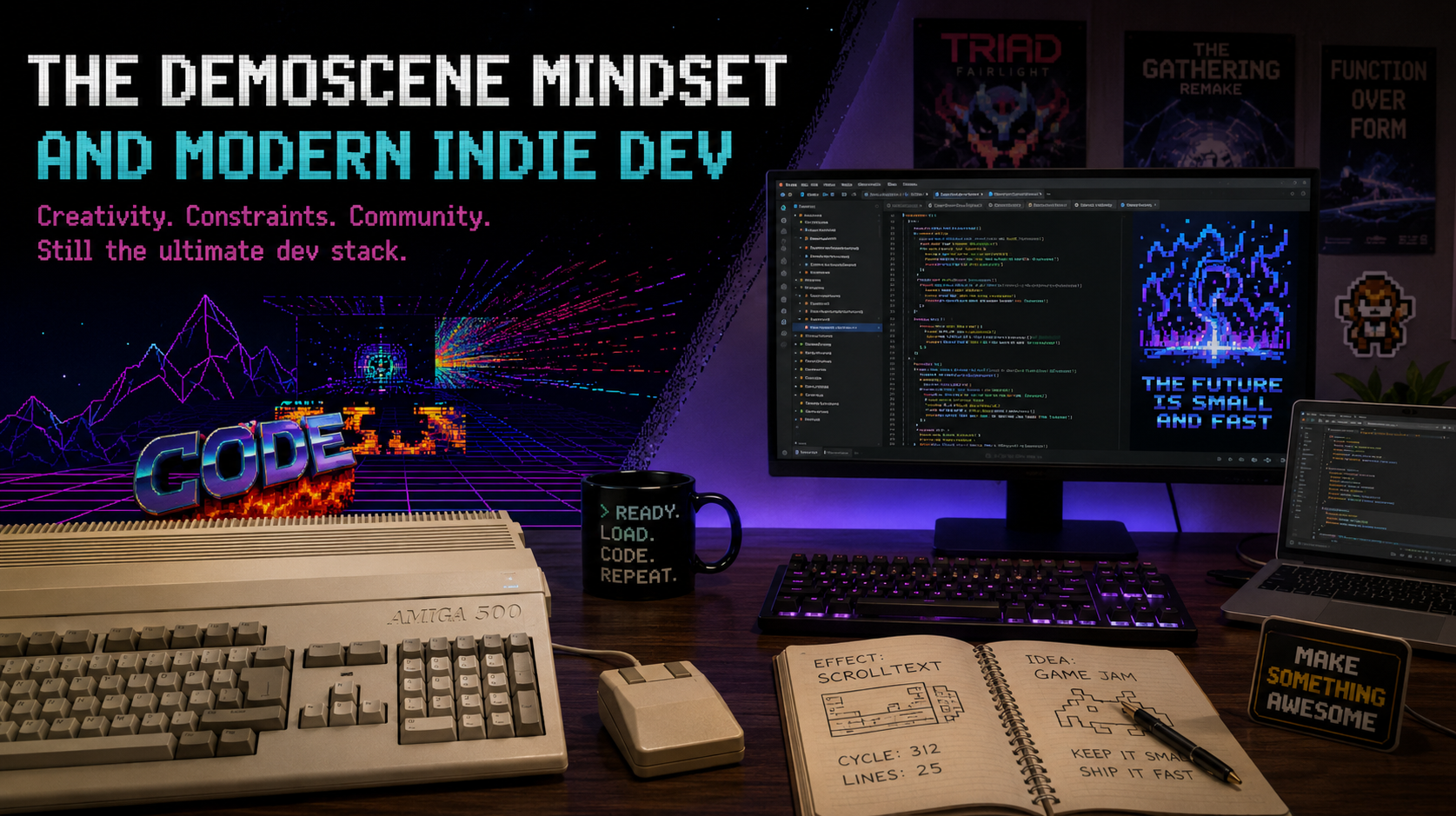
The Demoscene Mindset and Modern Indie Dev
The demoscene has always been about achieving the impossible with limited hardware, creative coding and technical innovation. Although today's indie developers have access to powerful tools and modern game engines, the mindset that drove the Amiga and Amstrad demoscene remains just as relevant. Understanding this philosophy can help developers build better software, create memorable games and become more inventive programmers.
Loading Screens We’ll Never See Again
There was a time when loading a game wasn’t instant. You didn’t just click and play, you waited. And in that waiting time, you were often greeted with artwork, tips, and animation that became part of the experience itself. From spinning disks to tape counters and pixel art stills, loading screens once defined the rhythm of gaming. Today, with SSDs and instant streaming, those moments have largely disappeared, but the memories remain vivid for those who lived through them.
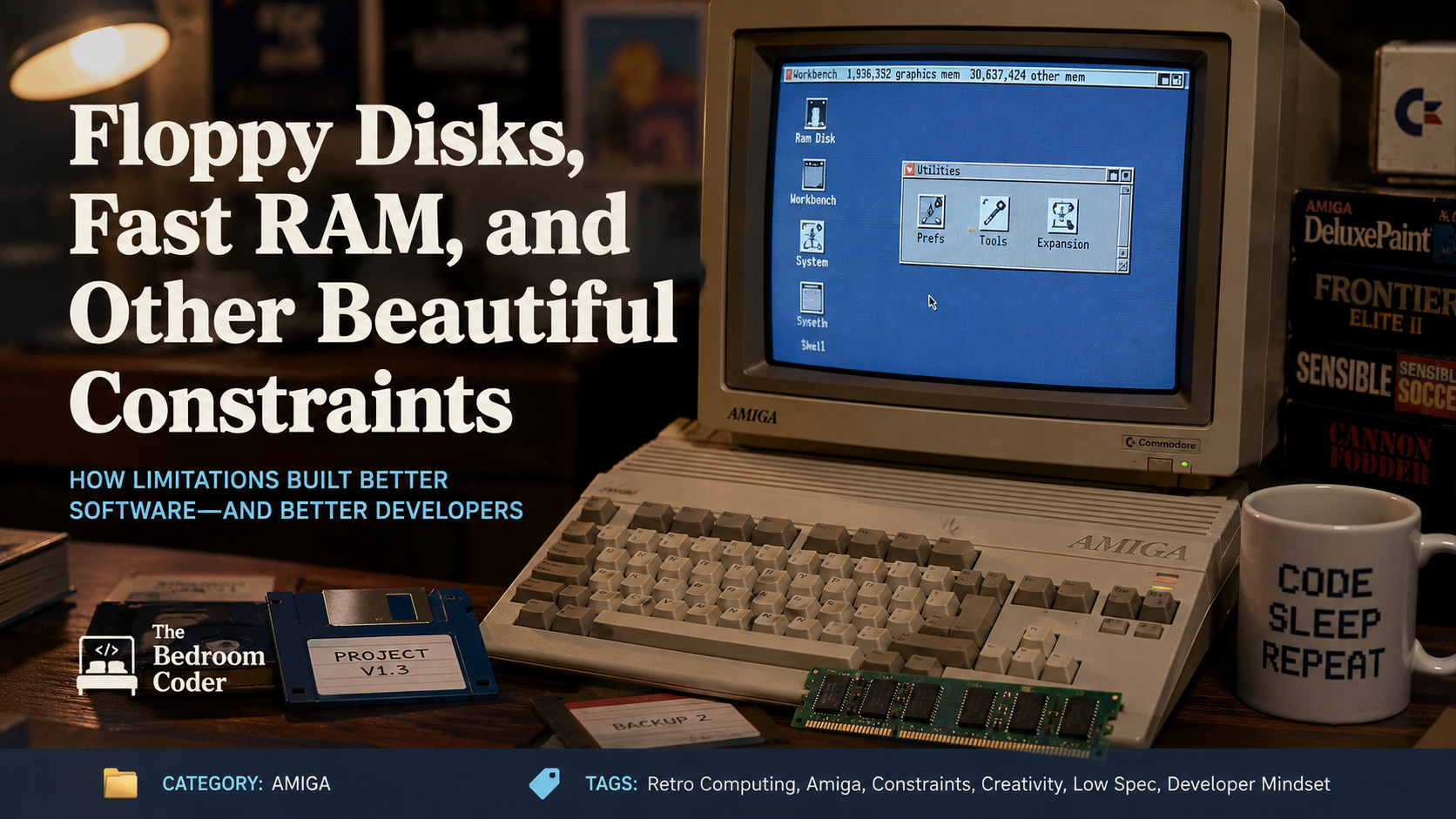
Floppy Disks, Fast RAM, and Other Beautiful Constraints
Modern computers give developers almost unlimited power, but some of the most creative coding came from an era of strict limits. From floppy disks and tiny memory footprints to clever optimisation tricks, constraints forced programmers to understand their machines deeply. This article explores why those limitations created some of the most elegant software and why the lessons still matter today.
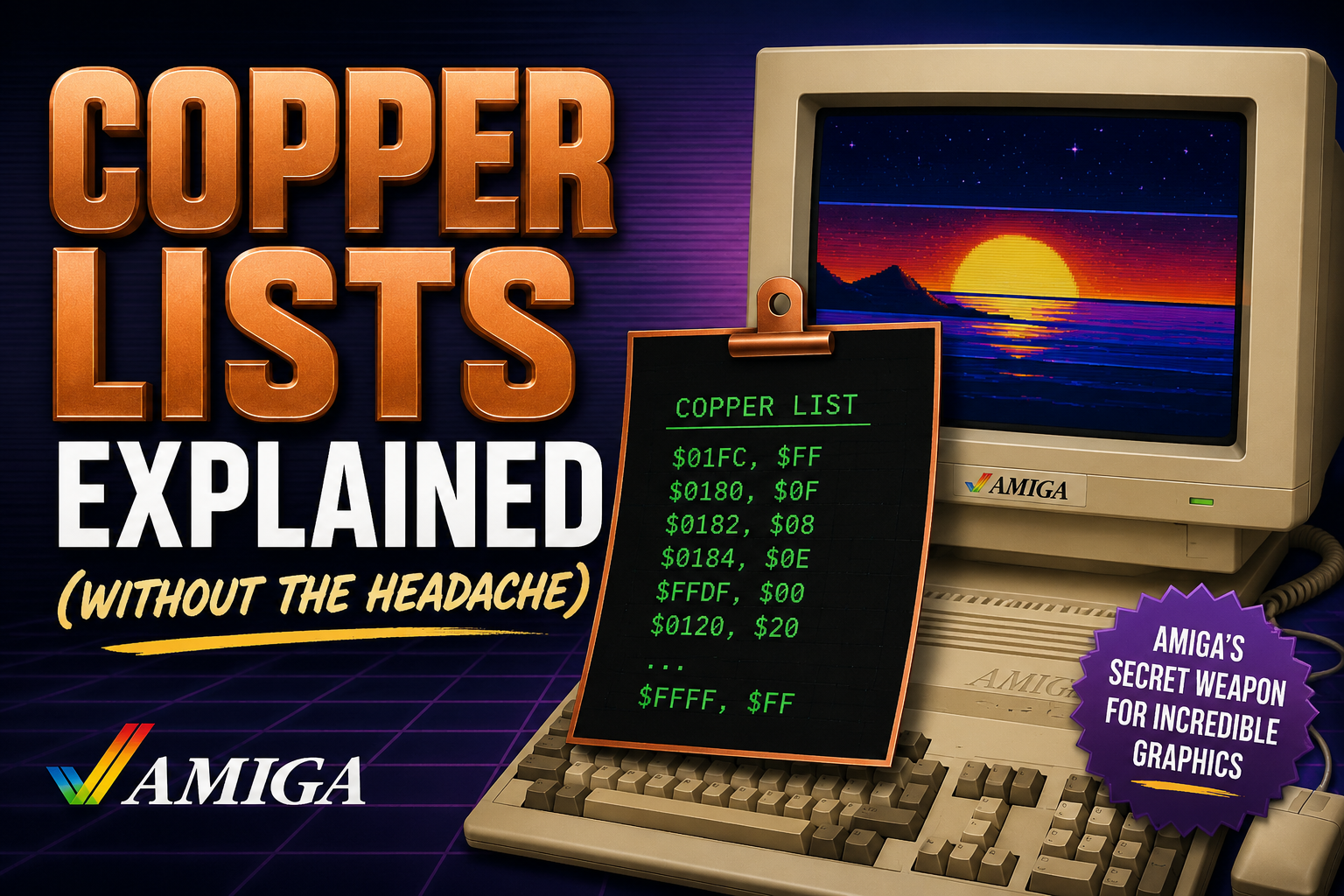
Copper Lists Explained (Without the Headache)
If you've spent any time reading about Amiga graphics, you've almost certainly come across the term Copper List. It can sound intimidating at first, but the concept is surprisingly straightforward. In this article, we'll break down what the Copper is, what a Copper List does, and why it became one of the Amiga's most powerful graphics features.
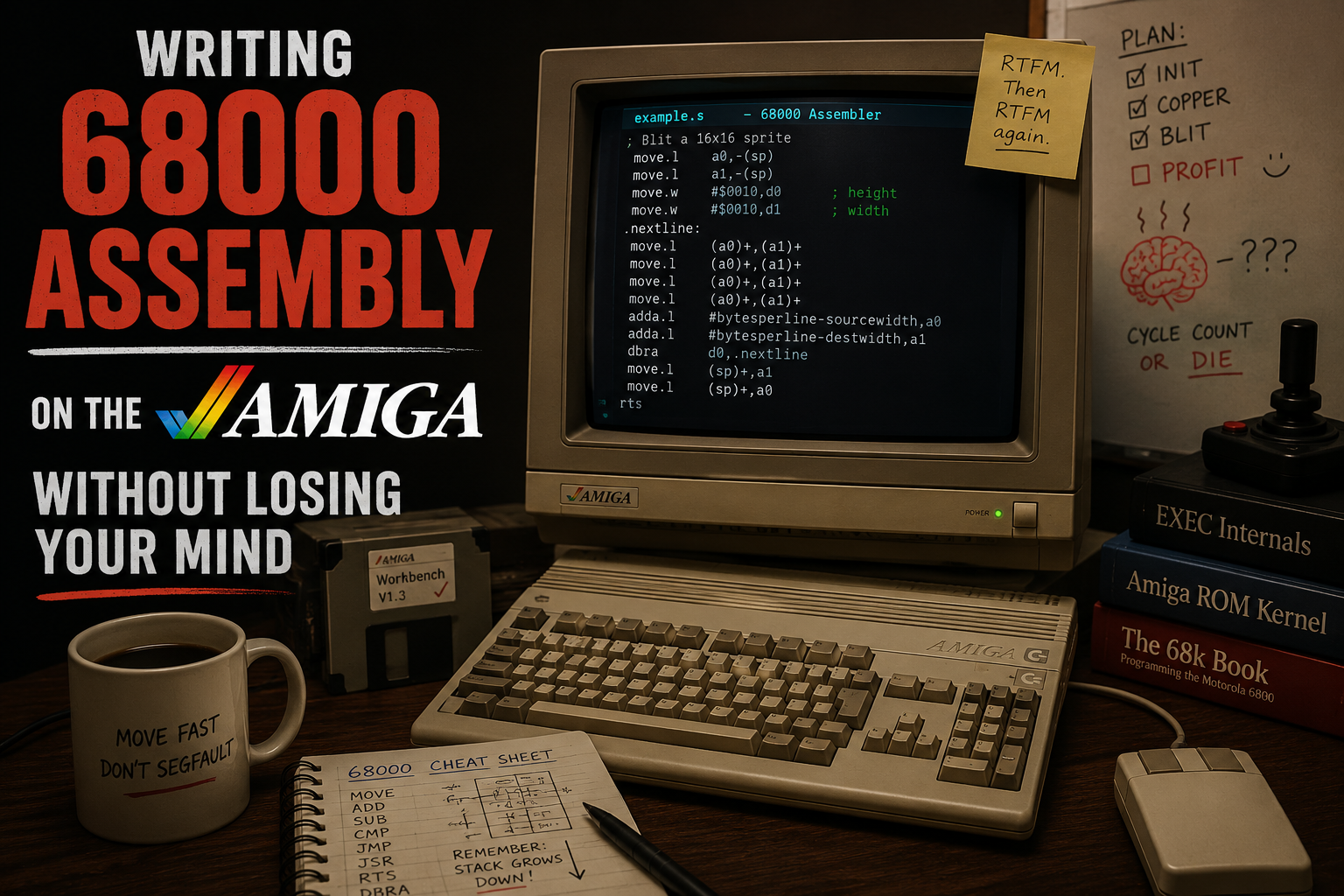
Writing 68000 Assembly on the Amiga Without Losing Your Mind
The Motorola 68000 processor sits at the heart of the classic Amiga experience, powering everything from games and demos to productivity software. While writing assembly language can seem intimidating at first, understanding a few core concepts makes it far more approachable. This article explores practical techniques, tools and habits that can help you write 68000 assembly on the Amiga efficiently without becoming overwhelmed.
Popular in Amiga
Become a member
Get the latest news right in your inbox. It's free and you can unsubscribe at any time. We hate spam as much as we do, so we never spam!